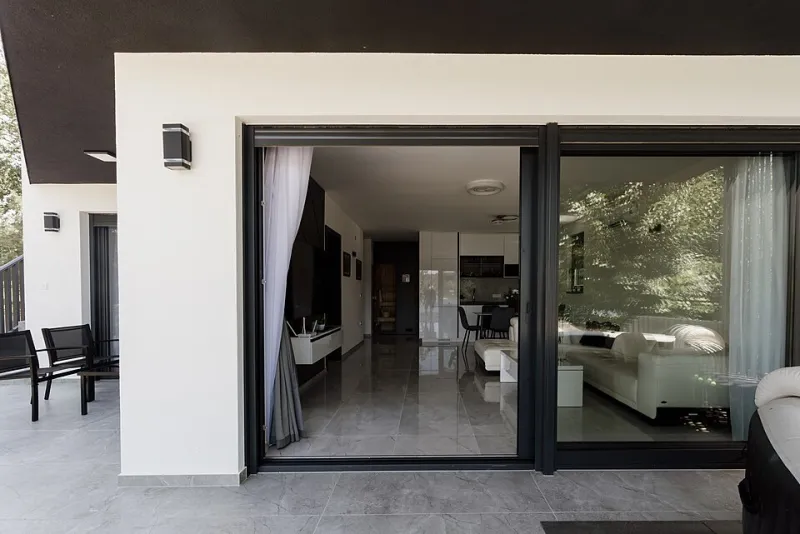
When the Dog Uses the Door More Than You Do: A Pet-Proof Patio Door Playbook

The reality check: your patio door is now a pet thoroughfare
A patio door is supposed to make a room feel bigger and the garden feel closer. Add a dog or a cat to the household and it also becomes a busy pedestrian crossing. The door gets nudged open with a nose, scratched at by a hopeful paw, and used as a viewing platform for next-door’s cat. On a wet Tuesday in November, it becomes a muddy-paw transfer zone.
None of that means you need a grim, utilitarian door. It means you need to choose and look after it with the household’s four-legged members in mind. The good news is that most of the decisions are straightforward once you know where the weak points are.
Glass, claws and the myth of the scratch-proof door
Let’s start with the bit everyone worries about: scratches. Standard patio door glass is tough. A domestic dog’s claws are not usually going to carve lines into the glass itself in the way they might mark a wooden floor. Where people often see damage is on applied coatings, films, stickers or the frame and seals around the glass.
That said, “pet-proof” is a phrase to treat with suspicion. No reputable supplier should promise a door that a determined Labrador cannot mark over a decade. What you can do is specify sensibly:
- Toughened safety glass is the baseline for patio doors in the UK. It is designed to break safely rather than into dangerous shards, which matters in a home with pets and children.
- Laminated glass can offer extra peace of mind where impact resistance or security is a priority. It is not invincible, but it holds together better if damaged.
- Scratch-resistant coatings can help with light marking, but they are not a force field. Ask what exactly is being coated and what the warranty actually covers.
- Avoid low-level decorative films in the dog’s favourite nose-height zone unless you are relaxed about them looking tired.
If your pet launches itself at the door whenever the postman appears, think about the whole door assembly, not just the pane. A sturdy frame, proper adjustment and a well-fitted lock matter as much as the glass.
Frames and tracks: where pets really leave their mark
The frame and threshold take more punishment than most homeowners expect. A dog leaning against a sliding door, a cat squeezing through a gap, or a pet flap flapping in the wind can all put strain on components that were designed for human use.
Sliding doors and recessed tracks
Sliding patio doors are popular with pet owners because they are easy to open and do not swing into the room. But the track is the weak spot. Grit, mud, hair and grass clippings collect there, and a gritty track can make the door stiff and noisy. Look for a design with a raised or recessed track that is easy to brush out, and keep a soft brush and vacuum nozzle nearby. Avoid oiling the track unless the manufacturer specifically recommends it — oil attracts dust and turns into a gritty paste.
Bifold doors and busy households
Bifolds are brilliant for opening up a garden room, but they have more moving parts. In a pet household, that means more places for hair and grit to gather. They can still work well, especially with a flush threshold and good brush seals, but they need more frequent cleaning than a simple sliding door. If you have a large, boisterous dog, consider whether the door will be constantly pushed and leaned on. A robust frame and a sensible traffic pattern will help.
French doors and the nose-height problem
French doors are charming, but the glass goes low and the handles are tempting. A cat can learn to hook a paw around a handle surprisingly quickly. If your pet is an escape artist, choose a door with a key-locking handle and keep the key out of paw reach — which is easier said than done in some households.
Built-in pet flap or separate garden route?
This is the big decision. A pet flap built into the patio door is convenient: the animal comes and goes without you acting as doorman. But it is not a free upgrade.
Built-in pet flaps typically require a specialist glazed unit with a hole cut at the factory. You should not expect a glazier to cut a hole in an existing sealed unit on site without compromising it. A proper pet flap can work well, especially microchip-operated versions that stop neighbourhood cats from moving in. But check:
- whether the door manufacturer allows it without invalidating the warranty;
- how the flap affects insulation and security;
- whether the flap is draught-proof and lockable;
- whether your home insurer needs to know.
A separate garden access route might mean a dedicated pet door in a wall, a utility room door, or a microchip cat flap in a back door. It keeps the patio door as a clean, human-sized opening and avoids compromising the main glazed unit. The downside is cost and disruption, and not every home has a suitable wall or door.
For many UK pet owners, the sensible compromise is a good patio door with no built-in flap, plus a separate microchip flap elsewhere. It keeps the patio door simple, secure and easy to maintain.
Security, insurance and the details people miss
A pet flap is an opening. Treat it like one. If you add a flap to a patio door, tell your insurer. Some policies are fine with it; others may exclude theft or escape claims if the door is not secured as specified. Check the policy wording before the fitter arrives, not after.
Also think about:
- Locking: a pet flap should have a locking plate or a secure closing mechanism for nights and holidays.
- Glass safety: pets and children can both run into glass. Safety glass is essential, and a manifestation strip or frosted band at pet height can make the door more visible.
- Escape routes: cats are notorious for slipping out. A microchip flap is better than a basic open flap, but it still needs a secure frame and a reliable lock.
- Buildings insurance and warranties: keep the installation paperwork. If a flap or door is damaged in a storm, you want to show it was fitted correctly.
The daily routine that saves the door
You do not need a military cleaning schedule. You need a towel by the door, a brush for the track and a bit of consistency. Wipe muddy paws before they reach the carpet, vacuum the track weekly, and check the seals every few months. If the door starts to drag, get it adjusted rather than forcing it. A well-maintained patio door handles pet traffic far better than a neglected one — and it keeps the bright, open feel that made you want the door in the first place.