The Metal That Meets the Weather: Patio Door Hardware for Wet UK Winters
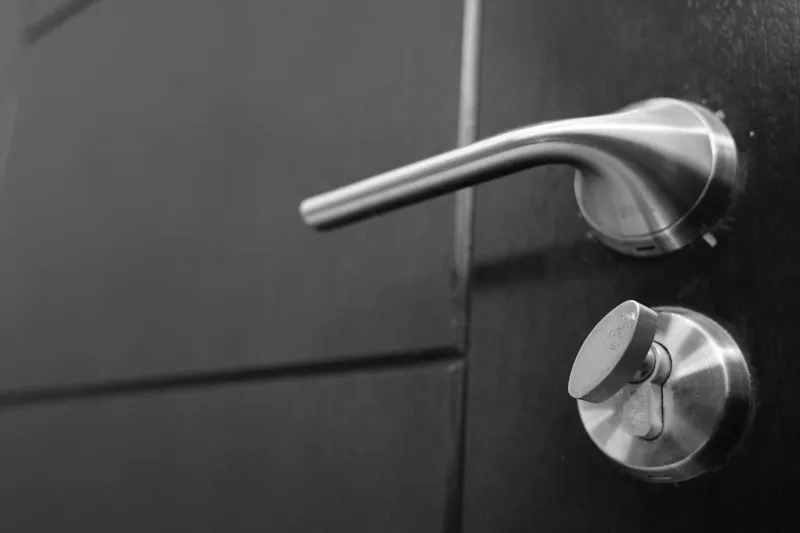
A patio door handle is not really a handle. It is the small metal object that your hand meets every day, the bit that catches the light in the showroom, and often the first thing to look tired when the weather turns. But the handle is only the visible part of the hardware story. Hinges, rollers, tracks, lock plates and the fixings that hold everything together are doing the quieter work — and they are the parts most likely to decide whether your door still glides smoothly after a few wet British winters.
So before you choose a finish because it matches the kitchen tap, it is worth choosing a hardware package because it suits your garden, your postcode and your cleaning habits. That is a less glamorous conversation, but a more useful one.
Start with exposure, not shine
Two doors can look identical on a specification sheet and live very different lives. A sheltered patio under an overhang in a quiet courtyard is not the same as a west-facing slider taking the full run of wind and rain across an exposed garden. A coastal home with salt-laden air is different again. So is a property beside a main road where winter grit and road salt get flicked up against the lower frame.
Ask yourself a few plain questions. Does the door face the prevailing wind? Is the garden open, or screened by hedges and fences? Are you within a few miles of the sea, or on a Scottish island where the wind carries salt further than you might expect? Do you rinse the door when you clean the car, or is it lucky to get a wipe in spring? There is no judgement here — just an honest brief. Hardware that copes with a mild, sheltered spot may be perfectly good; the same hardware on an exposed Cornish wall could be a false economy.
The four common families, in plain English
Brass is the traditional choice, and it is often misunderstood. Lacquered brass keeps its bright look but can wear at the edges, letting moisture underneath. Unlacquered brass develops a patina, which many people love and others do not. In coastal air, brass can spot and discolour more quickly unless it is cleaned and dried regularly. It is not a bad choice — it is a choice that asks for attention.
Stainless steel is the sensible workhorse. But stainless does not mean stain-proof. Grade 304 is common and fine for many inland homes; grade 316 is the more corrosion-resistant option often recommended for coastal or harsh environments. If you are near the sea, ask for the grade in writing rather than relying on a brushed look and a confident label.
Aluminium is light, strong and often powder-coated. The metal itself can perform well, but the finish and the fixings matter. A powder-coated aluminium handle can be a good match for modern doors, provided the coating is properly applied and the screws and spindles are not a less suitable metal waiting to corrode quietly underneath.
Powder-coated finishes — including the ever-popular black — are a coating, not a metal. That is not a criticism. A good powder coat is tough and colour-stable, but chips at the edges can expose the metal beneath. Ask whether touch-up paint is available and whether the warranty covers finish failure as well as mechanical failure. Black hardware is not automatically more weatherproof than brass or steel; it is simply a different finish with different care needs.
Temperature swings and the bits you cannot see
British winters are less about constant deep cold and more about repeated change: wet, mild, frosty, mild again. Moving parts feel that. Rollers, hinges and tracks expand and contract, and a door that was perfectly adjusted in July can start to catch in January. That is not necessarily a hardware fault, but cheaper components have less tolerance for it.
Ask what the rollers are made from and whether replacement parts are available. A stainless steel track with good drainage is easier to live with than a track that holds water and grit. Hinges should be specified for the door weight, not just the door style. And every moving part needs a sensible maintenance routine: vacuum or brush out the track, wipe away grit, and use only the lubricant the manufacturer recommends. Silicone or PTFE-based products are common; avoid random oils that attract dirt or leave a sticky film.
The cleaning cupboard can undo the finish
This is the quiet killer. A harsh cleaner that shifts bathroom limescale can also attack a lacquered handle or dull a powder coat. Avoid bleach-based sprays, abrasive pads and acidic descalers on hardware unless the manufacturer specifically says otherwise. Mild soap and water, a soft cloth and a proper dry are usually enough. On coastal homes, a periodic rinse with fresh water helps remove salt before it sits on the surface — but dry it afterwards rather than leaving droplets to do their work.
What to ask before you order
A good installer will welcome these questions, and a vague answer is useful information in itself.
- What grade of stainless steel is used, and is it suitable for coastal exposure?
- Does the warranty cover coastal environments, or is there an exclusion?
- Is the finish warranty separate from the mechanical warranty?
- Are replacement handles, rollers and hinges available in future?
- Are the fixings matched to the main hardware, or are they a different metal?
- What cleaning products does the manufacturer recommend — and what should I avoid?
- Is the track supplied with drainage or a cover profile to keep grit out?
Get the important answers in writing, especially if you are near the sea. A verbal assurance that it will be fine is not much help when a handle starts pitting two winters later.
A ten-minute winter routine
You do not need a shelf of specialist products. Rinse the door and hardware with fresh water if you are coastal, then dry the metal. Brush out the track and wipe the seals. Check screws and fixings for looseness. Lubricate moving parts sparingly with the approved product. Touch up any chips in powder-coated finishes before they spread. Keep rock salt away from the threshold where possible, and clean it up if it lands there.
Hardware is a small part of the door budget, but it is the part you touch, turn and trust every day. Choose it for the weather outside your window, not just the light in the showroom, and it will repay you with a door that still feels solid when the wind is doing its worst.